
They should be one of your first considerations when you’re setting your spending levels. Your vendors will be more sympathetic to your payment situation than lenders. Reach out preemptively if you’re concerned about a payment being late and see if they’ll be willing to extend. However, if they are 15 days late on either payment, they will pay a 20% interest penalty. This means the business would pay an additional $2,000 in interest on one $10,000 payment.

Automation Can Simplify Both Accounts Payable and Notes Payable
- If a company’s cash inflows don’t align with repayment schedules, it could face liquidity issues.
- Explore the latest best-in-class add-on technology from Sage with our new webinar series.
- He has been a manager and an auditor with Deloitte, a big 4 accountancy firm, and holds a degree from Loughborough University.
- To learn more about leveraging financing and putting procure-to-pay to work in your procurement practice, watch our on-demand Finance and Automation webinar.
- Adam received his master’s in economics from The New School for Social Research and his Ph.D. from the University of Wisconsin-Madison in sociology.
- Additionally, they are classified as current liabilities when the amounts are due within a year.
Accounts payable vs notes payable is a financial topic accounting that explains the basic differences between the two forms of liabilities owed by the entity to the lenders. They could pay the supplier in the two installments that they outlined in the payment terms. If they were to accept the terms, the debt would be recorded as accounts payable. • Accounts payable are short-term, informal debts to suppliers, often due within 30 to 90 days, without interest. Ready to simplify how you manage notes payable and improve your AP performance? It keeps payments low in the short term and improves cash flow flexibility.
Automated Debt Collection
- This will set the deadline for when the payment is due as well as any extra costs if you miss the payment.
- Assessing how well a company manages its notes payable vs. accounts payable is crucial for understanding its financial health and long-term stability.
- He has been the CFO or controller of both small and medium sized companies and has run small businesses of his own.
- When the supplier delivers the goods it also issues a sales invoice stating the amount and the credit terms such as Due in 30 days.
- Companies with a high DPO, taking longer to pay their invoices, can use the extra cash on hand for early payment discounts or other short-term investments.
- A smooth accounts payable process helps organizations keep track of invoices, avoid late payments and fees, and fulfill their short term obligations.
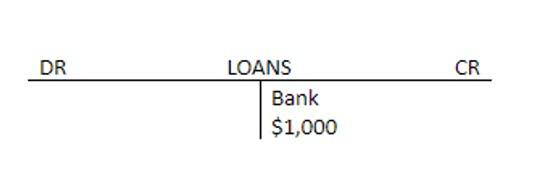
Notes payable generally refer to formal written agreements in which a company promises to repay a specific amount, often with interest, by a set date. These agreements may be short- or long-term depending on the maturity period outlined in the note. Suppose a company wants to buy a vehicle & apply for a loan of $10,000 from a bank.

Notes Payable = Principal + Interest − Payments
He currently researches and teaches economic sociology and the social studies of finance at the Hebrew Accounting Security University in Jerusalem. Managing Accounts Payable (AP) presents more challenges compared to Notes Payable because of the high number of transactions and the diversity of payment conditions agreed upon with various vendors. Join our community to get finance, operations, and procurement resources straight to your inbox.
This formula is useful when you’re trying to understand what a future payment is worth in today’s terms. It’s especially relevant for long-term notes payable and financial forecasting. Businesses use this to evaluate loan terms or compare different financing options.

This is later adjusted to the exact amount when the invoice has been received. An account payable is essentially an extension of credit from the supplier to the manufacturer. It allows the company to generate revenue from supplies or inventory so the supplier can be paid. This includes manufacturers that buy supplies or inventory from suppliers that extend the terms for the payment. Examples of notes payable in business loans include term loans for equipment purchase or expansion. Lines of credit, conversely, offer a flexible borrowing limit that can be drawn upon as needed, often with variable interest rates, serving different financial needs.
- Notes payable essentially mean repaying money borrowed from a bank or other creditors.
- The cash flow statement provides insight into how money is coming into and leaving the business.
- Here are some practical examples to illustrate the differences between the two.
- To help you do that, we will cover everything about notes payable in this article and how you can automate your payables for greater efficiency.
Is notes payable a liability or an asset?
With the right platform in place, businesses can ensure timely payments, optimize cash flow, and even leverage early payment discounts to improve profitability. The main differences between notes payable vs. accounts payable lie in their formality, interest, and terms. Notes payable is a formal, written agreement made with lenders, whereas accounts payable is generally represented by a supplier invoice. In terms of interest, notes payable often come with interest charges, while accounts payable typically don’t unless payments are delayed. Additionally, notes payable can be either short-term or long-term, whereas accounts payable is a short-term liability, typically due within a year. Notes payable vs. accounts payable are typically listed in separate categories on the balance sheet.
Notes due within 12 months are considered current or short-term liabilities, and notes after one year are taken as long-term or non-current liabilities. The only documents between buyer and seller are invoices from the difference between notes payable and accounts payable seller side and purchase order from the vendor side. However, note payable is a more formal written loan contract which is more complicated with dozens of pages. Both the items of Notes Payable and Notes Receivable can be found on the Balance Sheet of a business.