Research
Rice bran extract ameliorates dyslipidemia through the modulation of LDL-receptor, ApoA1, and ApoB100 proteins.
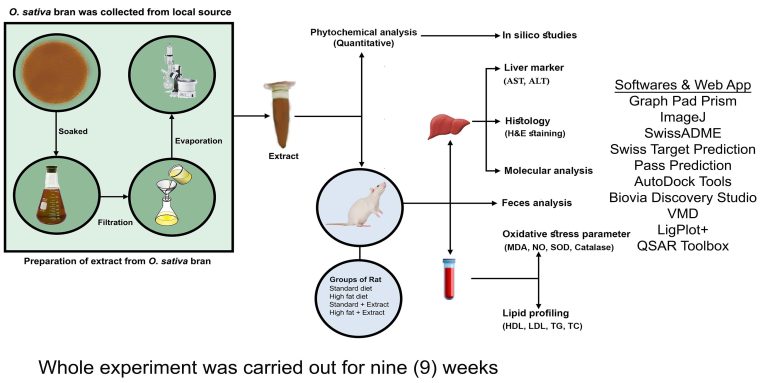
Background: Ethanolic extract of Oryza sativa (Asian rice, variety: BRRI-29) bran (OSBE) contains many antioxidant type phytochemicals.
Objectives: In this study, Wistar rats were fed with OSBE to evaluate its efficacy in lowering high-fat diet (HFD) induced oxidative stress and harmful lipids.
Materials and methods: Male Wistar rats were fed either with a standard diet (SD) or highfat diet (HFD). Half of the rats from each group were fed with 100 mg/kg OSBE and remaining half were fed with only the diets. Feeding was continued for 9 weeks.The body weight, liver weight, and weight of different adipose tissues were quantified. Plasma lipids and parameters related to oxidative stress were also evaluated. The transcript levels of several adipogenesis associated factors, receptor, and surface proteins of high-density lipoprotein cholesterol (HDLC) and low-density lipoprotein cholesterol (LDLC) were also measured.
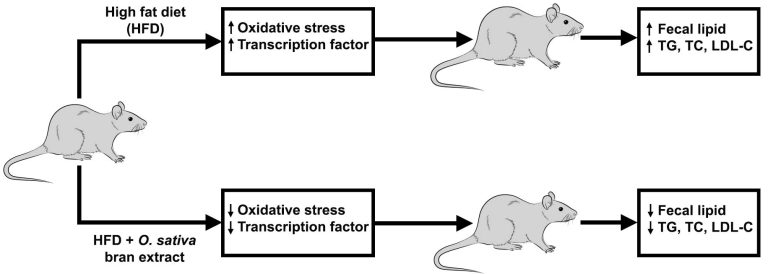
Results: The antioxidant activity of OSBE was comparable to butylated hydroxytoluene (BHT) which might be due to its higher level of polyphenols (283.0±17.2 mg GAE/g extract) and flavonoids (107.5±12.13 mg QE/g extract) content. The HFD-mediated increase of body weight, liver weight, and visceral fat weight was significantly reduced in rats consuming OSBE with HFD. The increase of oxidative stress biomarkers was also prevented with a simultaneous increase of the activity of antioxidant enzymes in rats consuming OSBE. It also down-regulated the transcript level of peroxisome proliferator-activated receptor-gamma (PPARγ), CCAAT enhancer binding protein alpha (C/EBPα), and liver X receptor-alpha (LXRα) which consequently up-regulated the gene expression of LDL-receptor and ApoA1 but down-regulated the gene expression of ApoB100.
Conclusion: Antioxidant-rich ethanolic extract of O. sativa bran (rice bran) can downregulate pro-adipogenic transcription factor which consequently increase of the gene expression of LDL-receptor that can positively change HFD-induced dyslipidemia in rats.
Extract of Syzygium cumini seeds can prevent high-fat diet-induced hyperglycemia by controlling GLUT4-gene expression
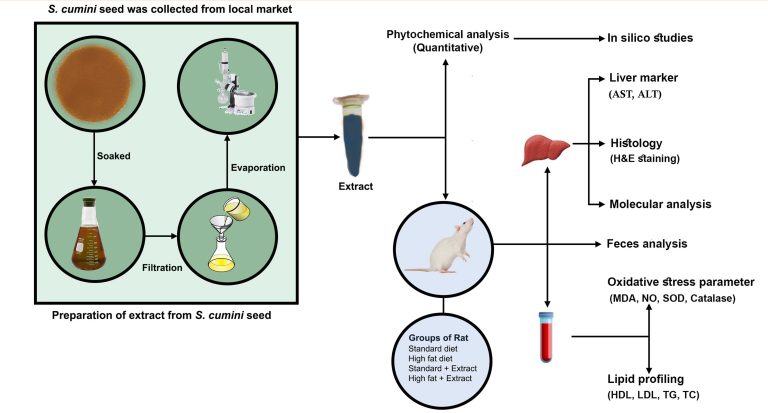
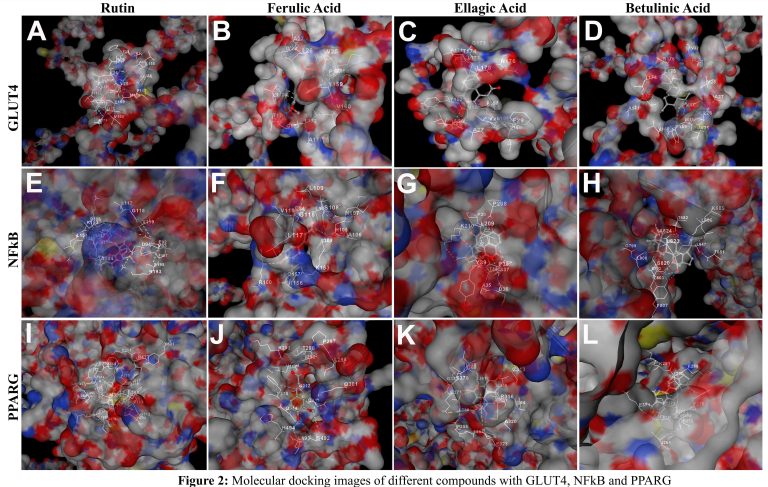
The seeds of Syzygium cumini (Local name: Jaam) contain anthocyanins, alkaloids, antioxidants, and other phytochemicals, which slow down the conversion of polysaccharide into monosaccharide. The aim of this study was to evaluate the efficacy of S. cumini seed extract (SCSE) in the prevention of high-fat diet (HFD) induced dyslipidemia and hyperglycemia in rats. Male Wistar rats were divided into four groups as follows: control, control + SCSE, HFD, and HFD + SCSE. The extract was given orally at 200 mg/kg/day throughout the treatment period of 12 weeks. Feeding of SCSE lowered HFD-induced increased blood glucose, insulin, and HbA1c levels in Wister rats. However, SCSE could not change body weight, liver weight, fat weight, and plasma lipids like: triglyceride (TG), total cholesterol (TC), low-density and high-density lipoprotein cholesterols (LDLC and HDLC) significantly. The levels of oxidative stress markers such as malondialdehyde (MDA), nitric oxide (NO), and advanced oxidation protein product (AOPP) were significantly reduced in rats consuming SCSE, while the activity of antioxidant enzymes (SOD and catalase) was increased. SCSE also modulated the transcript levels of CCAAT enhancer binding protein alpha (C/EBPα), nuclear factor kappa-light-chain-enhancer of activated B cells (NFκB), and glucose transporter (GLUT4) but not peroxisome proliferator-activated receptor-gamma (PPARγ). Thus, through the modulation of glucose transporter (GLUT4) and its regulatory transcription factors, the ethanolic extract of S. cumini seed effectively reduced high-fat diet-induced hyperglycemia in Wistar rats without changing the blood lipids significantly.
Spirulina platensis extract can prevent
high-fat diet-induced dyslipidemia and hepatotoxicit
Background: Spirulina (Spirulina plantesis) extracts are full phytochemicals that are able to reduce elevated blood pressure, blood sugar and lipids. These pharmacological effects are due to the presence of antioxidant type compounds.
Objective: This study aimed to determine whether Spirulina extract (SE) can reduce High-fat diet (HFD) induced harmful lipids and oxidative-stress in male Wistar rats.
Materials and Methods: Male Wistar rats were separated into four groups: control, high-fat diet (HFD), Control + SE and HFD + Spirulina platensis extract (HFD+SE). 50 mg/kg of SE was given to half the rats who received SE, whereas the other half just received control diets. Regular treatment and feeding continued for nine weeks. After sacrifice, the plasma’s lipid profile, hepatic enzyme activity, and parameters associated with oxidative-stress were examined. The body, liver, and various fat tissues were weighed.
Results: Rats fed with HFD showed significant dyslipidemia, liver damage, and elevated oxidative stress compared to the control group. Spirulina supplementation demonstrated improvement in lipid profiles by significantly lowering TC & LDLC levels while simultaneously raising HDLC level. Nevertheless, the feeding of S. plantesis extract did not substantially change the status of TG. Rats ingesting SE had considerably lower levels of oxidative stress indicators such as AOPP, NO & MDA.Yet, catalase and SOD enzymes did not demonstrate any adequate changes. Based on the hepatotoxicity evaluation, ALT and AST levels were decreased significantly by S. plantesis.
Conclusion: The findings suggest that Spirulina platensis extract can improve HFD-induced dyslipidemia. Also, it acts as a potent antioxidant and shows protective effects against hepatotoxicity.